Fragility · 4 min read
Contentment Is Enough
An Italian proverb that calms tempers and holds back growth. Read alongside Igor Sibaldi and Nassim Taleb, it becomes a question about how often we give up our potential.
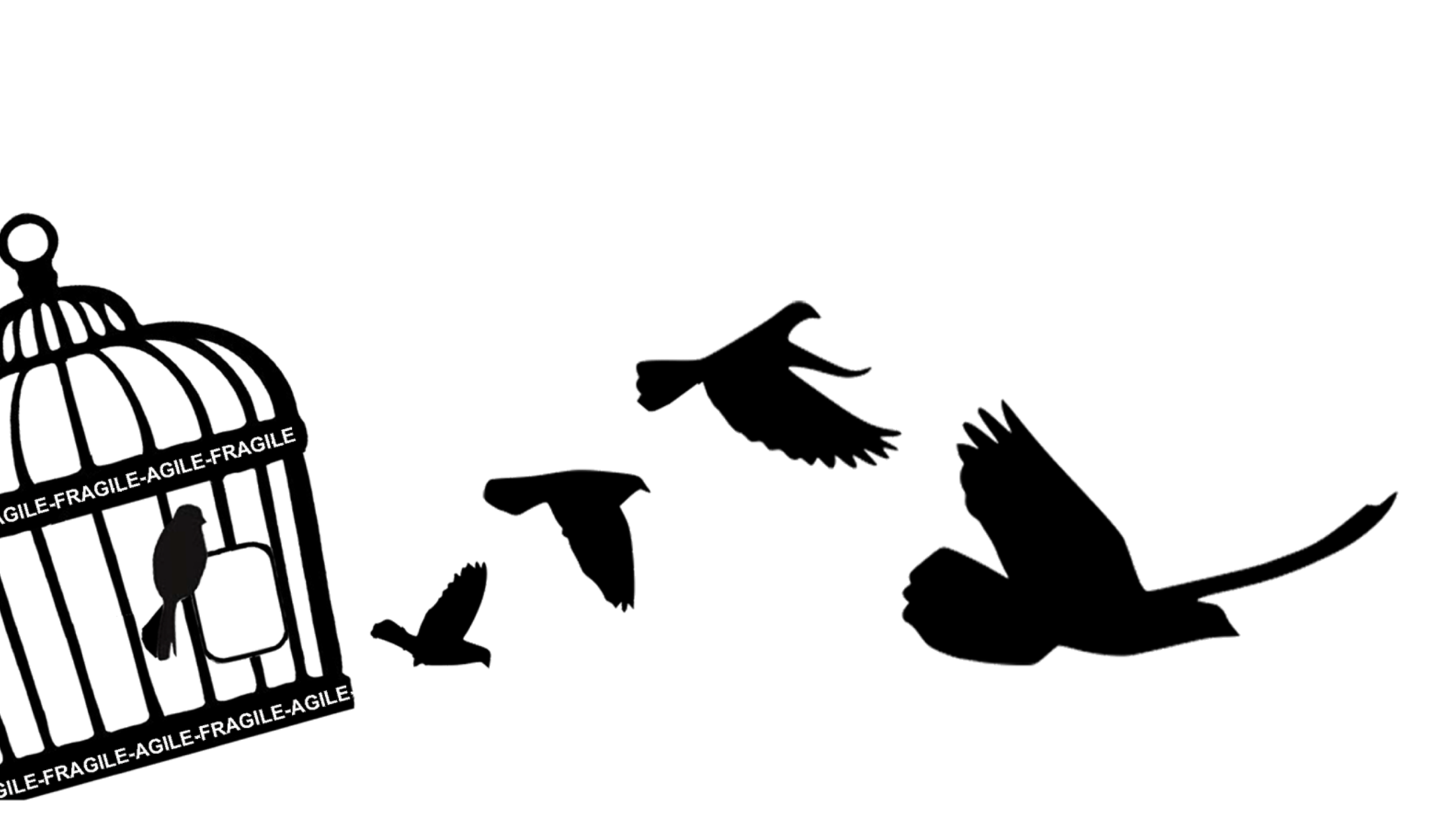
A reassuring proverb
Chi si accontenta gode, says an Italian proverb: whoever is content, enjoys. It calms the most heated tempers and, at the same time, holds back personal growth. It reduces us to small animals in a cage, busy furnishing our comfort zone without ever asking what lies beyond the bars.
It is not alone. A whole family of proverbs shares its tone:
- Grasp all, lose all. A warning against too much ambition or greed.
- Content and healthy, you live a hundred years. It stresses the value of satisfaction and serenity.
- Few but good. It prefers quality to quantity.
- You cannot have everything in life. It asks us to accept our limits and to be grateful.
- Better an egg today than a hen tomorrow. It advises a certain and immediate gain over the risk of a future possibility.
- Whoever leaves the old road for the new knows what they lose, but not what they will find. It expresses caution towards change.
- All that glitters is not gold. It reminds us not to be deceived by appearances.
- You cannot have a full barrel and a drunken wife. It points out how hard it is to get everything you want at the same time.
Where it comes from
The proverb has deep roots in popular wisdom. Like the others, it reflects a traditional mindset that urged moderation and appreciation for what one already has. It is a practical approach to life: well-being would come from acceptance and gratitude, rather than from a constant search for something more.
Two roots explain it well. The first is peasant tradition: in rural Italy, scarce resources forced people to find satisfaction in small things and to avoid the unhappiness that comes with greed and envy. The second is literary: similar expressions appear in classical texts and popular literature, which praise simplicity as a virtue. The idea is close to Epicurean and Stoic thought, for which limiting one’s desires is the path to serenity.
Igor Sibaldi’s view
Igor Sibaldi, in his theory of Speciation, sees contentment as an obstacle to personal and spiritual evolution. For Sibaldi, human beings have an infinite potential for growth and transformation, which stops when we settle for what we have and refuse to explore wider possibilities.
Whoever settles does not evolve, because they give up desire and curiosity, the two fundamental forces of change. Desire is an evolutionary tool: it pushes us to seek, to discover, and to create new realities, and it carries us beyond the limits we have set ourselves. Settling, by contrast, is a way of avoiding risk, staying in the comfort zone, and closing off access to a larger dimension of ourselves.
A dialogue with Nassim Taleb
Next to Sibaldi we can read Nassim Taleb, the thinker of antifragility. Their ideas meet on five points.
1. Going beyond limits and opening up to risk. Sibaldi invites us to cross the borders of our comfort zone and the rules imposed by society, to discover an unlimited potential: Speciation rests on the idea that we evolve by exploring greater desires and embracing the unknown. Taleb observes that systems and people grow stronger when exposed to stress, risk, and uncertainty, provided they learn from them. Risk is a catalyst for growth.
2. The value of uncertainty. For Sibaldi, uncertainty is a door to new possibilities, while clinging to certainties stifles the ability to change. For Taleb, uncertainty is essential to progress: what is antifragile thrives in chaos and uses it to adapt and to innovate.
3. A critique of conformism. Sibaldi criticises the cultural and social cages that limit the individual and urges us to break free of them to imagine something else. Taleb criticises institutions and systems that reward conformism, because excessive rigidity makes them vulnerable to the unexpected and blocks innovation.
4. The force of desire and action. Sibaldi sees desire as the vital force of discovery: only those who desire beyond their limits can evolve. Taleb encourages proactive action in the face of uncertainty, and preparing for the unknown recalls desire itself as an engine of transformation.
5. Stillness against evolution. For Sibaldi, stillness means not evolving, which means not living. For Taleb, static and fragile systems are bound to collapse, because evolution requires dynamism, flexibility, and adaptability.
Beyond the bars
These reflections lead to a simple and uncomfortable question: how often do we settle, giving up our potential? Perhaps it is time to question old habits and to imagine what we could reach if we decided to explore the unknown.
And you, are you ready to leave your comfort zone? Which proverb has shaped you the most, and how do you read it now?